making friends with nature
The Reason I Jump“Making friends with nature” is the author’s description of a relationship that offers welcome, emotional steadiness, and a sense of being alive when human interaction can feel demanding. In The Reason I Jump, nature is more than a pleasant setting for a walk: its greenness embodies life, and attending to it can make the author feel accepted and connected to a world from which people may seem to push him away.
Walking and the meaning of green
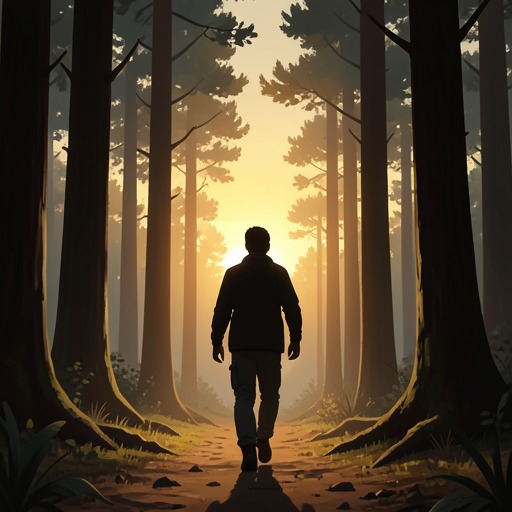
Asked why people with autism may enjoy walks, the author allows that exercise and being outdoors can feel good, but identifies a stronger reason for himself: a love of nature’s greenness. The qualification matters. He offers an explanation from his own perspective, not a universal formula, and says that this attachment may differ from other people’s appreciation of trees and flowers as beautiful sights.
For him, nature’s importance reaches beyond visual pleasure. Looking at it brings a sense of permission to be alive in the world and leaves his whole body feeling recharged. That welcome stands in contrast to the experience of being ignored or pushed away by people: nature, as he describes it, continues to offer an inward embrace. The claim is intimate and embodied, locating reassurance not in an abstract idea of the natural world but in what attention to it makes possible for him.
Green also carries a compact meaning of its own. The author associates it with the lives of plants and trees, and then with life itself. This association gives the walk its emotional force: going out is not simply movement through outdoor scenery, but a way of encountering a visible sign of continuing life. The explanation links a specific colour and living things to renewal without reducing nature to decoration.
A friend beyond human conversation
The author introduces making friends with nature as a pleasure that others might not expect. He connects it to the pressure of social interaction: people with autism may think intensely about the impression they are making and about how they ought to respond. Nature offers a different kind of company. It is at hand, and its presence is described through a sequence of active, changing qualities: glowing, swaying, bubbling, and rustling. The natural world does not require the author to manage a conversation or judge how he is being received.
Simply looking at nature can bring a striking shift in perspective. The author describes feeling as though he is being absorbed into it, his body reduced to a tiny speck from long before his birth and melting into nature. The feeling is powerful enough, in his account, to make him forget both that he is human and that he has special needs. The image does not present nature as a cure or claim that difficulty disappears; it describes a momentary change in scale and attention in which the burden of a socially defined identity recedes.
That companionship also has an emotional reciprocity. Nature calms him when he is furious and seems to laugh with him when he is happy. He knows that another person might doubt that nature can truly be a friend, but grounds the possibility in human beings’ membership in the animal kingdom. He suggests, cautiously, that people with autism may retain some buried awareness of this kinship, and says he will cherish the part of himself that experiences nature as a friend. The emphasis on possibility and personal attachment keeps the claim from being presented as a scientific explanation.
Testimony, difference, and interpretation
The account belongs to a question-and-answer book in which a thirteen-year-old author explains experiences that other people may misread. The book’s introduction presents the answers as an effort to help readers understand what may be happening in the minds of autistic people, while acknowledging that each person’s experience varies. The nature passage follows that same testimonial approach: it offers a carefully felt explanation, marked by personal qualification, rather than a rule that can be applied to everyone.
Its contrast between human company and the natural world also reframes what counts as friendship and pleasure. The author does not say that autistic people lack feeling or attachment; instead, he describes a rich response to living things and a form of companionship that does not depend on fluent social exchange. Nature’s greenness, movement, and sounds become the means through which he feels welcomed, steadied, and connected. The phrase “making friends with nature” therefore expresses both a source of comfort and a claim about the author’s capacity for relationship: the bond is real in its effects, even when its companion is not human.